


Introduction
Man born of a woman on International Day of Women, nurtured by women, loved by a woman, receive numerous support from women and by the grace of God gave birth to a beautiful girl.
This premises that Women throughout my life are considered a valuable assert that I cannot afford not to contribute to their course when it comes to celebrating their valuable contributions to the World’s development.
International Women’s Day (IWD), is celebrated annually on March 8, is a global event dedicated to recognizing the achievements of women and advocating for gender equality.
Over the years, the celebration has evolved from a labor movement protest into a broader platform for advocacy, recognition, and social mobilization.
Today, various governments, political parties, civil society organizations, educational institutions and community groups use the occasion to promote women’s rights, achievements, and highlight persistent gender inequalities.
In many countries, International Women’s Day celebrations incorporate pageantry, awards, and leadership showcases.
These events are not merely celebratory but also serve as tools for empowerment by providing platforms for women to demonstrate leadership, advocate for social causes, and gain public recognition.
This write-up seeks to contribute and explore the immense contributions women’s continue to bring to the development spheres and how the celebration of International Women’s Day serves as both a pageantry and empowerment tool, exploring the global origins of the celebration, its relevance within Africa, and its expression within the Ghanaian context.
Global Context of International Women’s Day
International Women’s Day originated from early twentieth-century labor and socialist movements advocating improved working conditions and voting rights for women.
The first National Woman’s Day was observed in the United States in 1909.
The idea of an international observance was proposed by Clara Zetkin in 1910.
The observance gained global prominence when the United Nations officially began celebrating International Women’s Day in 1975 during International Women’s Year.
Since then, the United Nations has coordinated annual themes highlighting issues such as gender equality, women’s leadership, economic empowerment, and the elimination of gender-based violence.
Globally, International Women’s Day functions as a platform for advocacy and recognition.
Governments, organizations, and activists use the event to promote policies supporting women’s rights and to celebrate women who have made significant contributions to society.
In many contexts, the celebration also includes pageantry and award ceremonies that highlight women’s leadership, talent, and social impact.
Scholars argue that when pageantry incorporates advocacy and community projects, it can become a platform for empowerment rather than merely emphasizing physical appearance.
It has been revolutionized and accepted by almost every country in the world. This year’s 2026 theme is “Rights, Justice, Action”!!!!
African Context of International Women’s Day
In Africa, International Women’s Day holds particular significance due to ongoing challenges related to gender inequality, including limited economic opportunities, gender-based violence, and unequal access to education among many other themes.
At the same time, the continent has made notable progress in promoting women’s leadership and participation in governance.
The African Union emphasizes gender equality as a central component of development through frameworks such as Agenda 2063, which recognizes women’s empowerment as essential for sustainable development.
Across African countries, IWD celebrations often include national conferences, community forums, entrepreneurial exhibitions, and cultural performances.
Pageantry and recognition ceremonies are commonly used to celebrate women leaders, entrepreneurs, and activists.
These activities provide platforms for women to share experiences, promote social causes, and inspire younger generations.
In many African societies, pageantry also intersects with traditional cultural institutions.
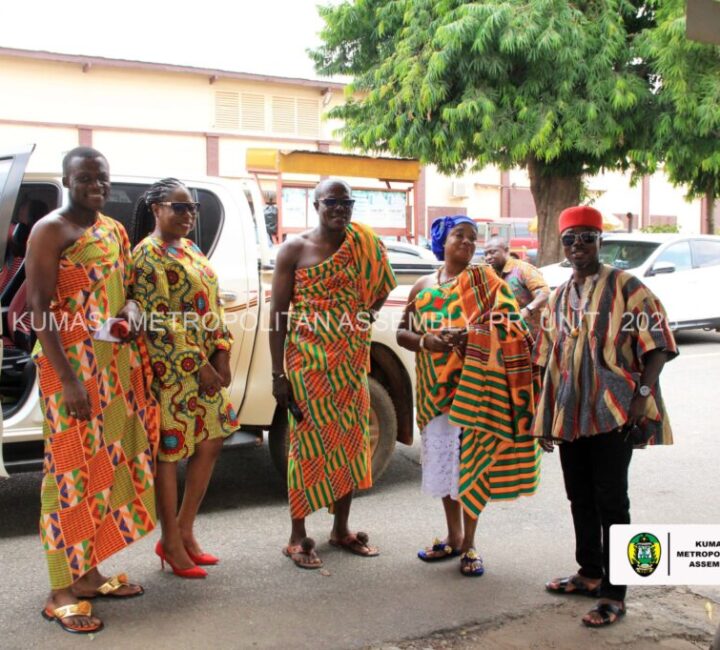
Female traditional leaders, such as queenmothers in West Africa, often participate in these celebrations, reinforcing women’s historical roles in leadership and community governance.
All these activities further aims at contributing to the achievement of the Global agreed agenda Sustainable Development Goals (SDGs).
International Women’s Day in Ghana
In Ghana, International Women’s Day is widely celebrated by government institutions, civil society organizations, educational institutions, and community groups.
National celebrations are often coordinated by the Ministry of Gender, Children and Social Protection (MoGCSP), which aligns activities with the global theme set by the United Nations while addressing local gender issues.
Over the years the MoGCSP, continues to organize programs geared towards the creation of awareness and promotion women & girls empowerment, recognition of women whose achievement has not been recognized by many, further using the platforms to strengthen media engagement and enhancing issues related to gender issues.
In recent years the media both traditional and social media needs to be applauded with the voice the give to this special day. This needs recommendation and recognition to Ghanaian Media.
Pageantry as a Cultural and Empowerment Tool
Ghana has a vibrant culture of pageantry and public competitions that celebrate women’s achievements and cultural identity. Prominent examples include Miss Ghana , Miss Malaika and Ghana’s Most Beautiful.
These platforms increasingly incorporate advocacy projects focusing on education, health, sanitation, and women’s empowerment.
During International Women’s Day celebrations, similar pageantry-style events are organized within schools, universities, churches, and community organizations.
Unlike traditional beauty contests, these competitions often emphasize leadership, intelligence, cultural knowledge, and community service.
Contestants may be required to present social impact projects addressing community challenges.
Such initiatives help build confidence, public speaking skills, and leadership capacity among participants.
They also provide opportunities for women to gain visibility and recognition within their communities.
Recognition and Role Modeling
Recognition is an important element of empowerment.
International Women’s Day celebrations in Ghana frequently include award ceremonies honoring women who have excelled in fields such as entrepreneurship, education, health care, politics, and community development.
Public recognition of women’s achievements challenges traditional gender stereotypes and provides positive role models for younger generations.
Studies suggest that exposure to female role models increases girls’ aspirations and leadership ambitions.
In this way, IWD celebrations contribute to reshaping social attitudes toward women’s leadership, their roles in national and the world development and emancipation.
Economic and Social Empowerment
International Women’s Day events in Ghana also promote economic empowerment through business exhibitions, networking opportunities, and financial literacy programs for women entrepreneurs.
These activities highlight women’s contributions to the economy and encourage greater participation in business and leadership.
Pageantry winners and award recipients sometimes receive scholarships, training opportunities, or funding to support community projects.
This demonstrates how celebratory platforms can generate tangible benefits that extend beyond symbolic recognition.
Challenges and Criticisms
Despite positive developments, several challenges remain: risk of commercialization overshadowing advocacy, limited inclusion of rural and marginalized women. And persistent societal stereotypes about women’s roles.
To maximize impact, organizers must ensure inclusive participation, prioritize social impact projects, and align celebrations with long-term empowerment strategies.
Conclusion
International Women’s Day has evolved into a global platform for advocating gender equality and celebrating women’s achievements.
While the celebration originated from labor movements in the early twentieth century, it now incorporates diverse forms of activism, recognition, and cultural expression.
Within Africa and particularly in Ghana, the integration of pageantry into International Women’s Day celebrations reflects a unique approach to empowerment.
When designed to emphasize leadership, advocacy, and community service, pageantry provides opportunities for women to develop confidence, gain recognition, and promote social change.
Although critics caution that pageantry can reinforce superficial standards of beauty, the Ghanaian experience demonstrates that such platforms can be transformed into tools for empowerment when they prioritize education, advocacy, and social impact.
Ultimately, International Women’s Day celebrations that combine recognition, cultural expression, and advocacy can play an important role in advancing gender equality and inspiring future generations of women leaders.
Today I celebrate my Mother, my wife, my daughter, female friends, my colleague freedom fighters who always advocate for women’s empowerment, the media personnel who always seek for the welfare and the empowerment of women, my colleague female students, my professors who are women and continue to impact knowledge on women and girls rights and empowerment, while enhancing academic discourse and lastly men and boys (male involvement)who believe the inequalities in society deserve a change and therefore their fight for equality and equity for women Bravo to you all.
From the UN Women here are some of the rationale behind this year’s theme; Women’s rights mean nothing if we cannot defend them.
When justice fails, women pay the price. What justice actually means for women and girls. What you can do for Rights. Justice. Action!!! The battle for Rights, Justice.
Action for Women and girls continue unabated.
God bless our homeland Ghana and make our nation Great and Strong…..
Background:
The writer is Barima Akwasi Amankwaah,
A Development Practitioner and a PHD student at Binghamton University, New York, USA.